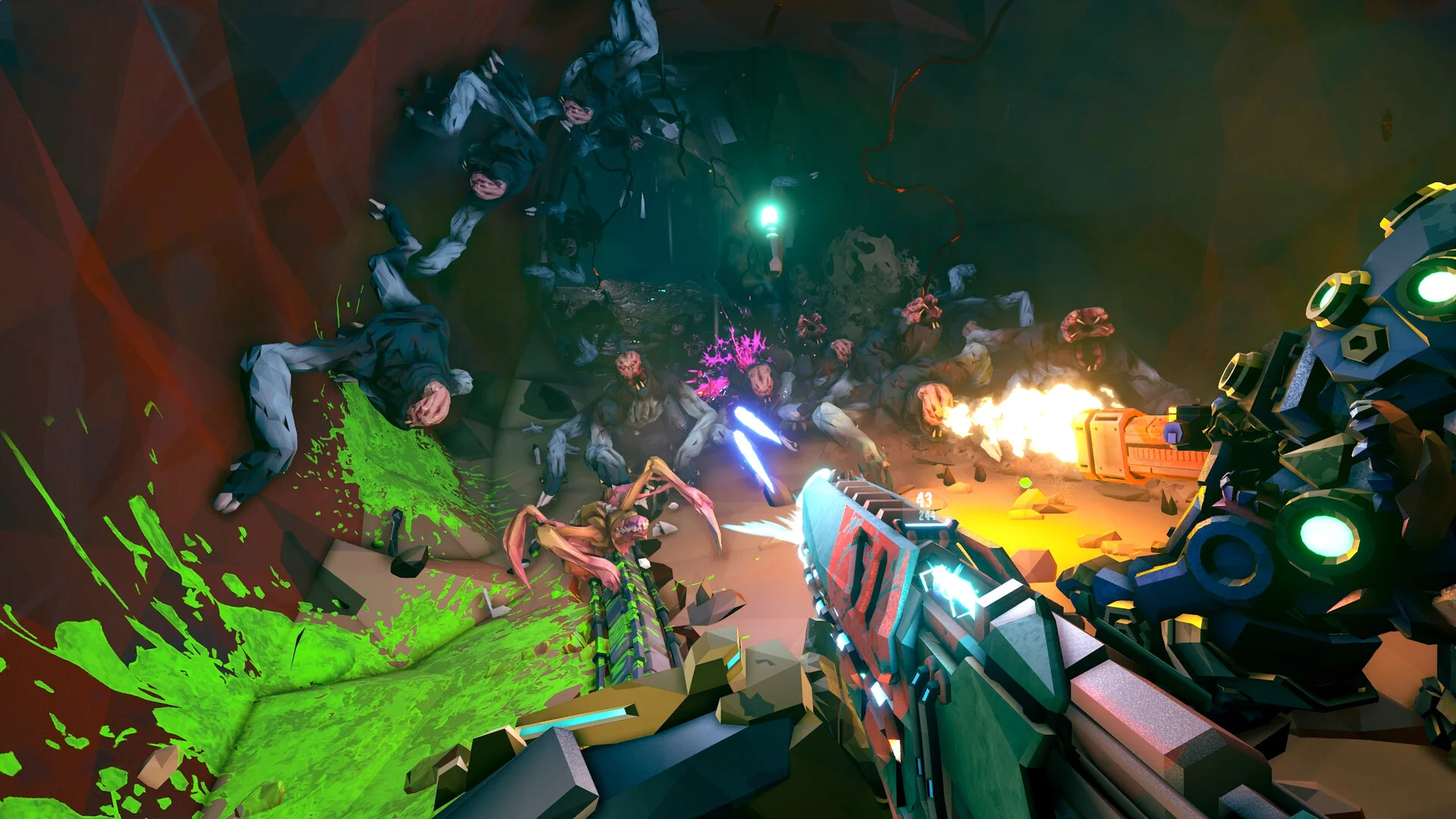
- Deep Rock Galactic Rogue Core best class depends on your role: support or DPS.
- Five classes exist in Early Access: Guardian, Slicer, Spotter, Falconer, and Retcon.
- Weapons are flexible - classes are defined by their signature abilities, not fixed loadouts.
- Solo-friendly picks: Falconer and Slicer for damage; Guardian for survivability.
- Retcon, the fifth class, launched in Early Access (its alpha codename was Gorgon).
Class System Overview: How Rogue Core Classes Work
Unlike the original Deep Rock Galactic, where each class carries a fully unique kit of weapons, traversal tools, and grenades, Rogue Core takes a more open-ended approach to build crafting. Almost any class can pick up almost any weapon or piece of equipment during a run. What actually defines each class is its built-in combat ability and the playstyle that ability pushes you toward.
The five playable classes in Early Access are:
| Class | Role | Signature Ability | Difficulty |
|---|---|---|---|
| Guardian | Support / Crowd Control | Repulsor gauntlets (blast + pulse field) | Easy |
| Slicer | Melee DPS | Energy blade slash | Easy-Medium |
| Spotter | Support / Debuffer | Tracking / marking dart | Medium |
| Falconer | Ranged DPS | Autonomous falcon drone | Easy |
| Retcon | Time-rewind hybrid | Rewind + Contingency Plan | Hard |
In simple terms, the roster splits into two support classes (Guardian and Spotter) and two damage classes (Slicer and Falconer), with Retcon as a hybrid built around resource resets, though every class can be built to deal damage thanks to the flexible loadout system.
Because weapons and equipment are shared across classes, your class choice is really a choice of ability. Pick the ability that matches how you like to fight, then let your run-based loot shape the rest of the build.
Video Highlights:
- Breakdown of all five class abilities in Early Access
- Why classes are defined by abilities, not fixed weapon kits
- The fifth class launched in Early Access as Retcon - Gorgon was its alpha codename
- Which classes pair best for team play
Guardian: The Defensive Anchor
The Guardian is the closest thing Rogue Core has to a tank-support hybrid. Its kit revolves around the repulsor gauntlets, which work in two modes:
- Shotgun pulse: A directional cone of force energy that deals solid close-range damage and carries very high stun power, letting you stagger big threats or create burst-damage windows.
- Pulsing energy field: An AOE field radiating around you that melee enemies refuse to enter, similar to the Guarding's energy shield aura from base DRG. Note that it does not block ranged projectiles.
This makes the Guardian exceptional at revives, safe deposits, healing trips to red sugar, and general breathing room during swarms. Enemies near your allies also get pushed back if they stand inside your field.
Players who want to stay in the thick of fights without getting overwhelmed. The Guardian suits defensive-minded players and dedicated team players who prioritize revives and area control.
Slicer and Falconer: The DPS Powerhouses
Slicer - Close-Range Burst Damage
The Slicer is the aggressive inverse of the Guardian. Its single ability, the energy blade slash, is dead simple: prime the blade, press the button, and cleave everything in a wide arc in front of you.
- Very high damage in a short window
- Capable of heavy critical hits
- Hits a wide arc, not just a single target
- Counts as melee damage, so melee-scaling perks and boosts apply
Falconer - Ranged DPS and Debuffs
The Falconer carries a falcon-shaped drone on its arm. Send it out and it autonomously hunts enemies, dealing shock damage and applying elemental effects until its charge runs out or you recall it.
- Excellent for distant threats the team can't reach quickly
- Shock damage enables elemental effect builds
- One of the easiest classes to play thanks to drone autonomy
- Certain run builds can keep the drone out nearly permanently - a huge advantage in final boss fights
Slicer
- Melee burst specialist
- Wide cleave arc
- Synergizes with melee builds
- High skill ceiling on positioning
Falconer
- Ranged DPS option
- Autonomous drone targeting
- Shock elemental effects
- Very beginner-friendly
The Slicer's blade requires you to be in melee range of everything, including heavy hitters. Without Guardian support or strong mobility gear, aggressive Slicer play can get punished fast during boss phases.
Spotter: Guaranteed Crits for the Team
The Spotter is Rogue Core's information-warfare class, a spiritual cousin of the Scout from base DRG. Its gauntlet fires a tracking dart with two firing modes:
- Direct hit: Marks a single enemy - ideal for priority threats.
- Ground target: Creates a small AOE zone; any enemy entering gets marked.
Marked enemies are highlighted for the whole team, and - this is the big one - every attack that hits a marked enemy is a guaranteed critical hit. Early testing also suggests marked targets may take increased crit damage, though in-game descriptions are still incomplete in the alpha.
A Spotter paired with a crit-focused Slicer or Falconer produces some of the highest damage numbers possible. If you enjoy enabling teammates rather than carrying kills yourself, this is your class.
Best Class Rankings and How to Choose
Rankings always depend on team composition and build luck during a run, but here's how the classes generally stack up for common scenarios:
| Scenario | Best Class | Why |
|---|---|---|
| Solo queue | Falconer | Autonomous drone, low micromanagement |
| Boss fights | Falconer / Spotter | Permanent drone uptime; guaranteed crit marks |
| Team support | Guardian | Revives, stuns, area denial |
| Melee builds | Slicer | Blade counts as melee damage |
| Max team damage | Spotter | Marks enable crit builds for everyone |
| New players | Falconer | Easiest ability to use effectively |
Identify Your Preferred Range
Melee fans pick Slicer; ranged players pick Falconer; tactical supporters pick Guardian or Spotter.
Match Your Ability to Your Build Plans
If your run rewards crit gear, Spotter's marks multiply its value. Melee-scaling loot favors Slicer.
Coordinate With Your Squad
Two support + two DPS is a balanced four-player comp. A Spotter plus a Slicer is a devastating damage duo.
Adapt During the Run
Since weapons are class-agnostic, pivot your loadout to cover team gaps regardless of your class.
Before Locking In Your Class:
- Decide support (Guardian/Spotter) or DPS (Slicer/Falconer)
- Check what your squad already has picked
- Plan your build direction (melee, crit, elemental)
- Test the ability in a low-stakes run first
The fifth class shipped in Early Access under the name Retcon - "Gorgon" was simply its codename during the Closed Alpha playtests, and the developers leaned into the retcon joke for the final name. Her kit centers on Rewind, a positional reset that also restores ammo, grenades, health, and armor, plus Contingency Plan, which can revive a fully downed squad. And since Rogue Core classes are essentially abilities with characters attached, adding even more classes post-launch is far easier than in base DRG. Expect the roster to grow.
FAQ
Q: What is the best class in Deep Rock Galactic Rogue Core?
There is no single best class. Falconer is the most beginner-friendly pick thanks to its autonomous drone, while Spotter enables the highest team damage with guaranteed crit marks. Your ideal choice depends on whether you prefer support or DPS.
Q: Can any class use any weapon in Rogue Core?
Yes, for the most part. Build crafting is open-ended, and weapons and equipment are not locked to classes. Classes are defined by their signature abilities and playstyle rather than fixed loadouts.
Q: What happened to the Gorgon class?
Nothing bad - Gorgon was the codename of the fifth class during the Closed Alpha playtests. When the class shipped in Early Access, it was renamed **Retcon**, a wink at the retroactive name change. The class is fully playable today with its Rewind, Rage, and Contingency Plan kit.
Q: Is the Spotter's mark good for solo play?
It works, but it shines in teams. Guaranteed crits on marked enemies benefit the whole squad, so a Spotter paired with crit-building teammates produces far more value than in solo runs.